Story
Biobased Materials and the Future of Textiles
For over 60 years, Designtex has looked to biobased materials to develop new products. Now we’re marrying biobased intelligence to high-performance textiles.
By Diana Budds
Materials as Problem Solvers
Materials make our spaces more functional, beautiful, and healthy. Now, amid the growing environmental crisis, designers are revisiting the composition and manufacturing methods behind materials in order to reduce dependence on fossil fuels.
These factors have helped spark more invention around biobased textiles. This category of material encompasses the oldest textiles on the planet as well as some of the newest, and the term “biobased” means that the material is made in whole or in part from rapidly renewable sources, like plants and trees.
The Rise of Biobased Textiles
As new textile developments enter the market, the vocabulary around the materials has shifted, too. In the mid-twentieth century, nylon and polyester, both derived from petroleum, mainstreamed. This gave rise to the “synthetic” category, as distinct from the “natural” wool and cotton that had predominated. Materials have evolved quite a bit since then and while the dichotomy of natural and synthetic made sense before, it doesn’t fully address the array of materials on the market today. For example, compostable utensils—which are frequently composed of cornstarch, sugarcane, bamboo, or wood processed into bioplastics—are man-made, but from rapidly renewable biomass. The polymers that comprise them are both natural and synthetic, and can be described as biosynthetic.
Designtex’s Legacy and Innovation
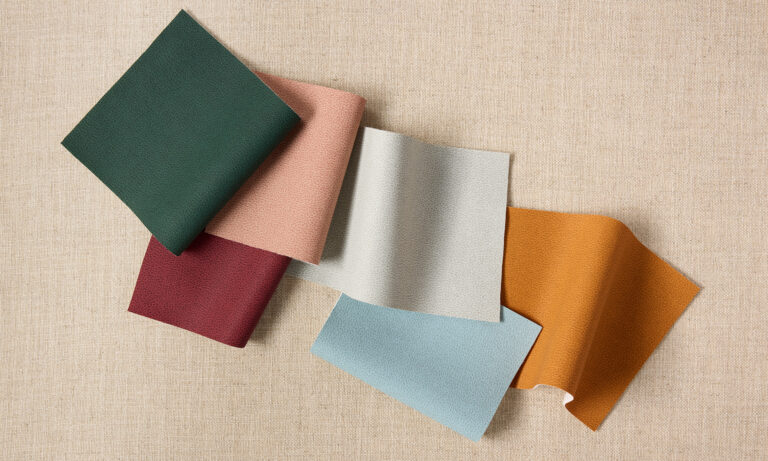
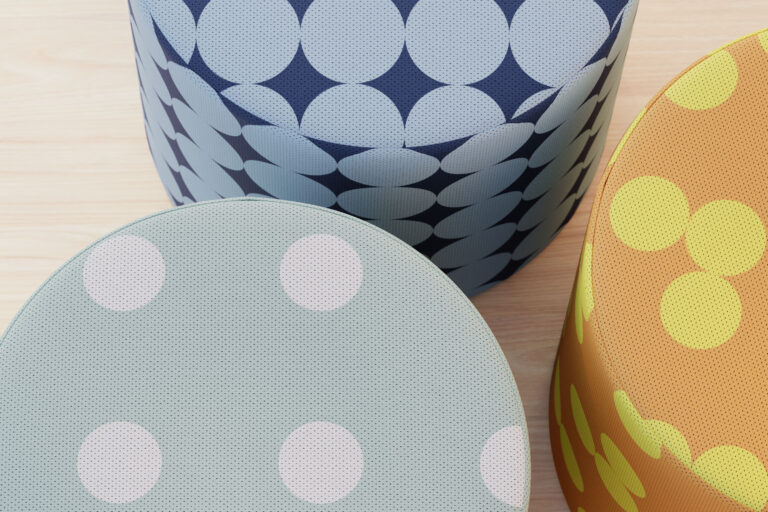
Designtex has long looked to biobased materials for opportunities to make better textiles, starting with Mohair Plus, a luxury performance upholstery launched in the 1960s that lives on in the company’s offering today. In the 60 years since then, the company’s family of biobased products has evolved to include high-performance woven upholsteries composed of recycled wool, mohair, and linen; wallcoverings made from cellulose derived from sustainably forested wood; and, most recently, coated upholstery made with a polyurethane derived from non-food corn. The product, named Ethos, is 12% biobased and helps high-performance coated materials, a category that has relied on petroleum products for their characteristics, to become less dependent on them.
Challenges and Progress in Biobased Coatings
The production of biobased coated materials is highly complex, and introducing new ingredients to this process is challenging. Deidre Hoguet, Senior Director of Sustainability & Applied Research at Designtex, compares the current state of biobased materials to the dawn of recycled inputs. “Feeding recycled content into a manufacturing process started slowly,” Hoguet says. “As a drop-in replacement, it had to be validated to run well and result in first quality production. Over time, manufacturers iterated and increased the amount.” Now it’s common to have products that are 100% recycled, like Loop to Loop, a woven upholstery textile.
Exploring Bio-Fabricated Frontiers
Designtex R&D also pursues biobased materials that fall outside of traditional manufacturing methods, including materials like mycelium that are not so much “made” as they are “grown” into products. “Getting these bio-fabricated materials to be formed and perform like a standard product can be a long road, but it’s one Designtex travels with optimism,” says Carol Derby, VP of Research & Development at Designtex.
The Need for Clear Standards
While the market’s embrace of biobased materials is encouraging, there’s work to be done to make content claims consistent and clear. “Third-party verified claims are especially helpful here,” Derby says.
Hoguet sees a parallel with how the early years of organic food gained legitimacy through USDA protocols and certification. Designtex follows a similar approach for its biobased products, utilizing third-party ASTM testing and USDA certification to provide customers with the transparency they need to make informed decisions.
Designtex and its manufacturing partners are excited to welcome more biobased materials into the world in order to make our spaces more beautiful, better performing, and less dependent on the earth’s finite resources. “At Designtex, R&D has always been done through the lens of sustainability,” Derby says. “It’s not innovation for the sake of the new, but innovation in the interest of better materials.”